

Originally published in ANM’s Through My Lens LinkedIn newsletter on July 18, 2026. Republished here with the original author attribution.
Original LinkedIn edition: Read the source article on LinkedIn.
One of the things I find myself thinking about more and more is that nobody is born ashamed of being autistic.
Nobody comes into the world believing they’re lazy because they struggle to start tasks. Nobody is born thinking their sensory needs are a burden. Nobody arrives believing they have to earn the right to rest.
Those beliefs are learned.
And if we’re honest, culture plays a much bigger role in that learning than many of us are comfortable admitting.
Let me be clear from the start. This is not an argument against Zimbabwean culture. It is not an argument against family, respect, responsibility, community, or contributing to the lives of others. Those values have shaped who I am and have helped hold communities together through difficult times.
The problem starts when autistic differences are interpreted as character flaws instead of differences in how a person experiences and interacts with the world.
When difference becomes a moral issue
Many autistic people grow up hearing explanations for their behaviour that have nothing to do with autism.
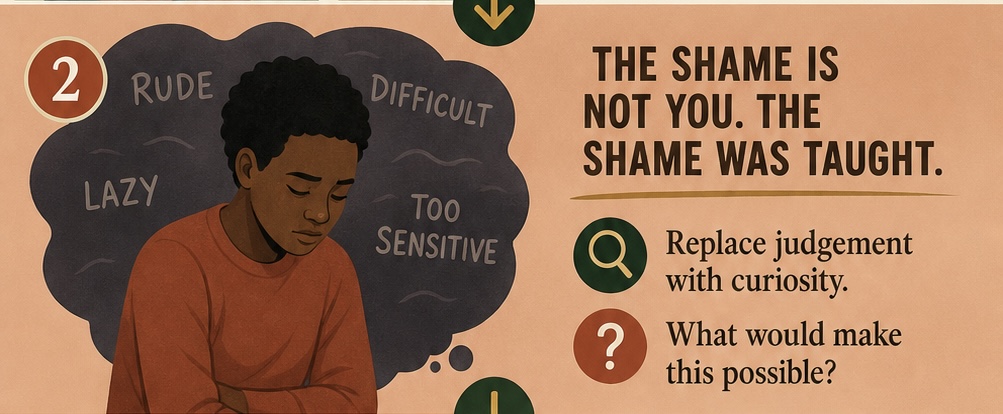
They’re told they’re rude when they’re overwhelmed.
Lazy when they’re struggling with executive functioning.
Difficult when they’re anxious.
Disrespectful when they need space.
Overdramatic when they’re experiencing sensory pain.
The behaviour is visible.
The reason behind it is not.
For years, I thought the problem was me.
Not autism.
Me.
I thought I was too sensitive. Too emotional. Too much work. Too disorganised. Too dependent. Too difficult.
And somehow, at the same time, never quite enough.
The strange thing is that nobody ever sat me down and taught me those beliefs directly. I absorbed them. Piece by piece. Comment by comment. Comparison by comparison.
That is how internalised ableism works.
It doesn’t arrive dramatically.
It settles in quietly and then starts speaking in your own voice.
The moment shame starts sounding like truth
Most conversations about autism focus on stigma coming from other people.
The teacher who doesn’t understand.The employer who stereotypes.The relative who insists autism didn’t exist in their day.The stranger who judges.
Those things matter.
But I think we sometimes overlook something equally damaging.
What happens when those voices move inside?
What happens when the autistic person starts doing the judging?
Internalised ableism is what happens when society’s assumptions become your own beliefs.
It shows up as thoughts like:
“I should be able to cope.”
“Everyone else manages.”
“I need to stop making excuses.”
“I shouldn’t need help.”
“I just need to try harder.”
The tragedy is that these thoughts often feel true because they’ve been repeated for so long.
An autistic person struggles with sensory overload and concludes they’re weak.
An autistic person struggles with executive functioning and concludes they’re lazy.
An autistic person needs support and concludes they’ve failed.
Instead of recognising a difference, they see a defect.
And once that happens, every struggle becomes evidence against themselves.
Growing up in Zimbabwe
I don’t think we can talk about autism in Zimbabwe without talking about expectations.
Family expectations.Community expectations.Cultural expectations.
Many of us were raised to value hard work, responsibility, resilience, respect for elders, and contribution to family life.
Those values matter.
I am not interested in pretending they don’t.
But what happens when an autistic child genuinely struggles with things others find easy?
What happens when eye contact feels uncomfortable?
When noise feels overwhelming?
When social interaction requires enormous amounts of energy?
When transitions are difficult?
Too often, the response is not curiosity.
It is correction.
And repeated correction can slowly teach a person that who they are is the problem.
The pressure to protect the family’s reputation
I think there is another part of this conversation that is often missing from Western discussions of autism.
In many African communities, people are not seen purely as individuals. Their behaviour reflects on the family.
That can create an additional layer of pressure.
Parents worry about what people will say.
Relatives worry about appearances.
Children notice.
Many autistic people quickly learn that being different doesn’t just attract attention to them. It attracts attention to the people around them.
So they adapt.
They hide confusion.
They hide discomfort.
They hide distress.
They learn how to look okay.
Not because they are okay.
Because they understand the social cost of looking different.
And over time, that can become exhausting.
When acceptance only arrives after you’ve hidden enough of yourself, it’s hard not to wonder whether people are accepting you or simply accepting the performance.
Autism shame is not autism
This is something I wish every autistic person understood.
The shame is not you.
The shame was taught.
There is a difference.
Autism is a neurodevelopmental difference.
Shame is what gets attached to it.
Too often, autistic people mistake shame for proof.
Proof that they’re failing.
Proof that they’re broken.
Proof that they’re not trying hard enough.
But shame isn’t evidence.
It’s an emotional response.
And emotional responses are not always telling us the truth.
Sometimes shame is simply the echo of years spent being misunderstood.
Culture can also be part of the solution
This is where I think we need a more balanced conversation.
Culture is not only a source of pressure.
It can also be a source of healing.
Zimbabwean culture contains values that align beautifully with neurodiversity-affirming practice: community, belonging, care, dignity, responsibility, and interdependence.
The goal is not to abandon those values.
The goal is to stop using them as tools of shame.
We can value respect without labelling autistic communication differences as disrespect.
We can value responsibility without calling autistic people lazy.
We can value community without requiring people to hide who they are in order to belong.
Those things are not mutually exclusive.
A question worth asking
I often wonder how many autistic people are carrying beliefs that were never really theirs to begin with.
How many are trying to fix parts of themselves that were never broken?
How many are exhausting themselves trying to meet standards that do not account for how their brain works?
Perhaps the most important question is not:
“How do we get autistic people to fit in?”
Perhaps it is:
“What would happen if we stopped treating difference as evidence of failure?”
Because the opposite of shame is not pride.
The opposite of shame is belonging.
It is being able to participate in family, community, education, work, and society without feeling that your worth depends on how successfully you hide who you are.
And that is a conversation Zimbabwe needs to have.
Not someday.
Now.
Wadzanai Mandibvira Through My Lens | African Neurodiversity Movement
“The most damaging thing stigma can do is convince a person to tell the story of their life in someone else’s words.” ❤️